Best Jenkins Hosting: Feature Overview
| Provider | Starting Price | Storage (GB) | CPU (Cores) | RAM (GB) | |
|---|---|---|---|---|---|
![]() | $4.24 | 50-400 | 1-8 | 4-32 | Visit Hostinger |
![]() | $4.00 | 20-4000 | 1-32 | 1-128 | Visit Kamatera |
![]() | $4.00 | 30-50 | 1-2 | 2-4 | Visit VPSServer.com |
![]() | $38.43 | 20-40 | 2-6 | 2-6 | Visit Neoxea |
What are Jenkins Hosting Services?
Jenkins hosting services are specialized solutions designed to support the deployment, management, and operation of Jenkins, an open-source automation server used for continuous integration and continuous delivery (CI/CD). These services provide the infrastructure needed to run Jenkins efficiently, including server environments that offer the necessary resources, reliability, and performance to handle Jenkins tasks such as building, testing, and deploying software. Jenkins hosting can be configured to meet various needs, from simple setups to complex, high-performance environments, ensuring that development and deployment pipelines run smoothly.
When to Choose and When to Avoid Jenkins Hosting?
| Reasons to Use Jenkins Hosting | Reasons Not to Use Jenkins Hosting |
| You require an environment dedicated to managing Jenkins pipelines. | You have minimal or no need for automated builds and deployments. |
| Your development projects involve complex CI/CD workflows. | Your projects are small-scale and do not require continuous integration. |
| You need a scalable solution to handle varying workload demands. | You lack the technical knowledge to manage a Jenkins environment effectively. |
| You want reliable and optimized performance for Jenkins tasks. | Your budget is limited and cannot accommodate specialized Jenkins hosting costs. |
| You need dedicated support for Jenkins-related issues and configurations. | You prefer simpler, less technical solutions like basic shared hosting. |
If Jenkins Hosting Is Not Relevant to Your Needs, Consider These Alternatives:
- Shared Hosting: Ideal for small projects and personal websites that don’t require complex automation.
- Dedicated Servers: Suitable for large-scale projects needing full control over server resources and performance.
- Cloud Hosting: Provides scalable and flexible solutions for varying workloads, paying only for the resources used.
- Managed CI/CD Services: Specialized platforms for continuous integration and delivery that handle server management for you.
How To Choose The Best Jenkins Hosting Provider
- Determine Your Needs: Assess whether you need a simple Jenkins setup or a high-performance environment. Match the provider’s offerings to your specific requirements.
- Evaluate Performance: Look for providers that offer high uptime guarantees and fast response times to ensure your Jenkins tasks run smoothly.
- Consider Scalability: Choose a provider that allows you to scale resources up or down based on your workload and project demands.
- Check Support and Ease of Use: Ensure the provider offers 24/7 support and a user-friendly interface for managing Jenkins.
- Review Pricing and Features: Compare the costs and features of different
- providers to find the best value for your needs. Look for plans that fit your budget while offering the necessary features and performance.
4 Best Jenkins Hosting Services: June 2026
-
Best Overall Hosting 2026
-
Users Top Choice 2026
-
Most Recommended NodeJS 2026
-
Best AI App Builder 2026
-
Top 5 Europe Web Hosting 2026

Hostinger is well-regarded for its budget-friendly hosting solutions and is a great choice for Jenkins users looking for cost-effective options. Their servers offer reliable performance and a range of features that cater to various Jenkins needs. Hostinger’s plans are designed to provide good value while ensuring quality service. Starting at very competitive rates, Hostinger makes it easy to deploy Jenkins environments without significant upfront costs.
Rating Based on Expert Review:
- Overall Score: 4.6
- Features: 4.7
- Reliability: 4.5
- User-Friendly: 4.8
- Support: 4.6
- Pricing: 4.9
Detailed Analysis:
- Features: Hostinger’s plans include essential features for Jenkins hosting, such as fast SSD storage and scalable resources. Their user-friendly control panel simplifies server management and configuration.
- Reliability: Hostinger provides a 99.9% uptime guarantee, ensuring that Jenkins tasks can run smoothly with minimal disruptions. Their infrastructure is built to support consistent performance.
- User-Friendly: Hostinger’s control panel is intuitive and easy to use, making it simple to set up and manage Jenkins instances. This ease of use is a significant advantage for users who prefer a straightforward approach.
- Support: Hostinger offers 24/7 support, although it may not be as comprehensive as some higher-end providers. Their team can assist with most Jenkins-related queries.
- Pricing: Hostinger’s pricing is among the most competitive in the industry. Their low-cost plans provide excellent value for Jenkins hosting, especially for users with tight budgets.
Pros and Cons:
-
Best VPS Hosting 2026
-
Top 5 Europe Web Hosting 2026
-
Top 5 Australia Web Hosting 2026
-
Top 10 Best Gaming Hosting Provider 2026
-
Top 10 Reseller Hosting 2026

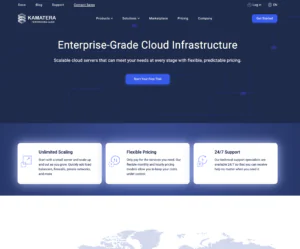
Kamatera stands out as a Jenkins hosting provider with its versatile cloud infrastructure that caters to a wide range of needs. With a broad selection of configurations, including up to 104 vCPUs and 512GB of RAM, Kamatera offers great flexibility. Their entry-level plans start at just $0.005 per hour, making it an attractive choice for both small projects and large-scale deployments. Kamatera provides a scalable solution, essential for Jenkins users who need to adapt to changing workloads. Its pay-as-you-go model ensures that you only pay for what you use, which can be a advantage for projects with fluctuating demands.
Rating Based on Expert Review:
- Overall Score: 4.9
- Features: 5.0
- Reliability: 5.0
- User-Friendly: 4.8
- Support: 4.9
- Pricing: 4.9
Detailed Analysis:
- Features: Kamatera offers a suite of features, including high-performance cloud servers, advanced networking options, and robust security measures. Its cloud solutions are highly customizable, allowing users to configure their environments to meet specific Jenkins needs, such as dedicated CPU cores and extensive storage options.
- Reliability: Kamatera guarantees 99.95% uptime, supported by a global network of data centers. This high level of reliability is crucial for Jenkins users who need consistent performance and minimal downtime for continuous integration and delivery pipelines.
- User-Friendly: While Kamatera’s interface is feature-rich, it may require a bit of a learning curve for new users. However, its Control Panel offers convenient access to essential features, making it easier to manage Jenkins deployments once familiarized.
- Support: Kamatera provides 24/7 technical support, which is invaluable for Jenkins users who might encounter issues outside of regular business hours. Their support team is known for its expertise and quick response times.
- Pricing: Kamatera’s pricing is highly flexible, with options to pay hourly or monthly. This flexibility, combined with competitive rates, makes it an excellent choice for both short-term projects and long-term Jenkins hosting needs.
Pros and Cons:

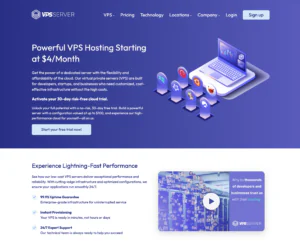
VPSServer.com positions its Jenkins hosting as a practical option for teams that want the control of a VPS while running dependable CI/CD workloads. Instead of a heavily “managed” wrapper, you get configurable compute resources that suit build-heavy projects, plugin-rich Jenkins instances, or container-based pipelines. It can be a good fit for developers who need root access for custom toolchains, private runners, or Docker-based builds, while still keeping costs more predictable than fully managed CI platforms. The tradeoff is that you’ll be responsible for most Jenkins tuning and maintenance, so it’s best for users comfortable with Linux administration.
Rating Overview
- Overall Score: 4.4
- Performance: 4.5
- Support: 4.3
- Security: 4.4
- Pricing: 4.5
- Ease of Use: 4.2
Detailed Analysis
Performance: Build jobs benefit from dedicated VPS resources, which helps reduce queue time for frequent commits. SSD-backed storage and scalable CPU/RAM options are helpful for dependency-heavy builds. You’ll still want to optimize Jenkins (caching, executor limits, and workspace cleanup) to avoid resource spikes.
Support: Support is generally best suited to infrastructure questions such as networking, restarts, and VM-level issues. Jenkins-specific troubleshooting typically requires your own expertise since pipelines and plugins can be highly customized. Clear escalation paths matter when CI downtime blocks deployments.
Security: A VPS model allows strict firewalling, SSH hardening, and isolating Jenkins behind a VPN or reverse proxy. You’ll need to keep the OS and Jenkins updated, and enforce least-privilege credentials for agents and integrations. Adding backups and audit logging is strongly recommended for production CI.
Pricing: VPS-style pricing can be attractive for steady workloads compared with usage-based CI billing. You can right-size plans to match build frequency and increase resources during release cycles. Costs may rise if you add separate storage, snapshots, or extra IP needs.
Ease of Use: Provisioning a server is straightforward, but Jenkins setup still involves Java/runtime tuning, plugins, and secure secret management. Automating installs with scripts or configuration management improves repeatability. Beginners may face a learning curve compared with turnkey Jenkins hosting.
Pros and Cons
- Configurable VPS resources for Jenkins builds
- Root access for custom toolchains and agents
- Predictable monthly costs for steady CI usage
- Works well with Docker-based pipelines
- Easy to scale when build demand increases
- Jenkins updates and hardening are self-managed
- Requires Linux admin skills for best results
- Plugin issues are typically outside host scope
-
Best Cloud Hosting Provider 2026
-
Over 99% Uptime 2026
-
Great Support 2026
-
Excellent Service 2026
-
Great Support 2025

Neoxea VPS Hosting is designed for users who want performance, reliability, and affordability in a single package. With advanced speed optimization, strong security, and developer-friendly tools, Neoxea is an excellent platform for everything from personal blogs to high-performance business websites.
Rating Based on Expert Review:
- Overall Score: 4.7
- Features: 4.8
- Reliability: 4.7
- User-Friendly: 4.6
- Support: 4.7
- Pricing: 4.8
Detailed Analysis
Features:
Neoxea provides SSD storage on all plans, free SSL certificates, automated daily backups, and enhanced anti-spam and firewall protection. One-click installers for WordPress, Joomla, and other CMS platforms simplify setup. Developers get access to PHP 7.x/8.x, MySQL/MariaDB, Git, SSH, and cron jobs—ensuring the environment is flexible enough for most modern web applications.
Reliability:
With a 99.9% uptime guarantee and well-monitored infrastructure, Neoxea ensures high availability and consistent performance. Cloud-based architecture, real-time hardware monitoring, and isolated accounts help prevent service interruptions and improve overall reliability, especially during peak traffic.
User-Friendly:
Neoxea offers an intuitive control panel that makes managing websites, domains, emails, and databases straightforward. Onboarding tools, knowledge base tutorials, and simple wizards guide new users through launching and maintaining their websites, while advanced users can dive deeper with server-level tools and staging environments.
Support:
Support is available 24/7 via live chat and ticketing. Neoxea’s support team is responsive and technically capable, helping with CMS setup, performance tuning, DNS issues, and even occasional site cleanup. While phone support is not offered, the support system delivers timely and effective assistance.
Pricing:
Neoxea offers competitive pricing with a high value-to-cost ratio. Even its entry-level plans include generous storage, unmetered bandwidth, and essential security features. There are no hidden fees, and a 30-day money-back guarantee allows users to test the platform risk-free. Higher-tier plans offer added resources, priority support, and multisite capability.
Pros and Cons
Why Trust Our Recommendations
At HostAdvice, our recommendations are built on trust and transparency. We blend in-depth expertise with real user feedback to deliver top-notch guidance for Jenkins hosting solutions. We aim to lead you to the most reliable and effective hosting options that align with your needs. For more details on our review methodology and ranking system, please explore our breakdown of how we evaluate and recommend providers.
How Do We Test and Rank?
At HostAdvice, we conduct thorough research and testing to identify the best Jenkins hosting providers. Our process involves purchasing and using the plans ourselves, as any regular customer would. This approach allows us to assess performance based on real-world usage, including uptime and speed. We also evaluate factors like transparency and reliability, giving extra points to providers who meet their promises. Our rigorous testing and continuous improvement ensure that our rankings reflect the most accurate and up-to-date information.
Best Jenkins Hosting: Final Recommendations
Choosing the right Jenkins hosting provider is crucial for ensuring your CI/CD pipelines run efficiently. Look for providers that offer reliable performance, scalability, and robust support. Balancing these factors with your specific needs and budget will help you select the best solution for your Jenkins setup. Whether you need high-performance environments or cost-effective solutions, understanding these aspects will guide you to a provider that meets your requirements effectively.