


Starting an e-commerce business doesn’t have to break the bank. This guide will show you three easy ways to launch your online venture with minimal investment, proving that creativity and determination can outweigh a hefty budget.
Launch Your E-commerce Business Website With Minimal Investment
| Provider | User Rating | Best For | |
|---|---|---|---|
 | 4.6 | Beginners | Visit Hostinger |
 | 4.4 | Pricing | Visit IONOS |
 | 4.2 | Design | Visit Squarespace |
Understanding eCommerce Business Models
The eCommerce business is better than ever before. Now you can start your first, own business without money. Today we will present to you the best business model for your needs. But first, you need to understand everything about business models and their pros and cons.
Traditional vs. Low-Cost Models

Traditional eCommerce typically involves purchasing inventory in bulk. Yes, you have to store it and ship it directly. This model demands significant upfront costs and carries the risk of unsold inventory. In contrast, low-cost models leverage technology and third-party services.

All of this means one thing. You can start without any money. See, you won’t hold inventory or ship products directly. As such, you can start a business with no money upfront.
Each of these methods comes with pros and cons. For example, starting a business on a budget requires certain skills and patience. It is also commonly used by newbies. But, you can still make a successful business in no time and start making a profit.
Choosing the Right Model for You
The appropriate eCommerce business model hinges on your skills, resources, and market demand. Consider your strengths. Are you a creative designer or an experienced marketer? Use those skills in your own online business to make more money.
Researching market trends and identifying gaps your business can fill without breaking the bank is crucial. Look for niches where you can add value or solve problems for potential customers. Consider factors such as your time commitment. Then add technical skills. Always consider a long-term plan for your business model.
Way 1: Dropshipping – The Zero Inventory Approach
Dropshipping has revolutionized eCommerce. For most people, it is the best way to make money online. The online business of this kind is simple and direct. It allows you to sell products to millions without actually owning those products.
What is Dropshipping?

Dropshipping allows you to advertise and sell products online. It’s a fun business venture. But, you won’t hold those products in your inventory or make them. When someone buys a product, it is shipped by the supplier. You don’t have that product in your possession. The merchant never sees or handles the product.
We saw a huge increase in dropshipping popularity. Even teenagers are doing it now. If you want to do the same thing, go with this method. Keep in mind that you need to find a product that will sell easily. Also, this type of market is loaded with competition. Your main mission will be to stand out. Can you do it? How can you achieve that?

Benefits of Dropshipping for New Entrepreneurs
The allure of dropshipping lies in its low barrier to entry. You don’t need to invest in inventory, which frees up capital and reduces risk. This model offers unparalleled flexibility. Now you can run your business from anywhere with an internet connection.
Moreover, you can easily test different product lines without committing to large inventories. This allows for rapid market testing and the ability to pivot quickly based on customer demand.
The initial investment is very low. You need only an internet connection and nothing else. The logistics and operations plan are handled by others.
Setting Up a Dropshipping Business

To start a dropshipping business, first choose a niche that interests you and has market potential. Research products within this niche and identify reliable suppliers. Platforms like AliExpress and Oberlo can connect you with manufacturers. Next, set up your online store.
Wix is probably the most common option for many. Other options include Woocommerce for WordPress or standalone platforms like BigCommerce.

Challenges and How to Overcome Them
While dropshipping offers many advantages, it’s not without challenges. Product quality control can be tricky since you don’t handle the items. Mitigate this by ordering samples and maintaining open communication with suppliers. Build relationships with your suppliers to ensure consistent quality and reliable shipping times.
Shipping times can be longer, especially with overseas suppliers. Be transparent with customers about delivery times and consider offering expedited shipping options. Clear communication about shipping expectations can help manage customer satisfaction.
You can start a new business venture within minutes. Once you have an eCommerce website you can start selling. Just think about what you want to sell. Then, pair that fact with a marketing strategy.
Way 2: Print-on-Demand – Unleash Your Creativity
For creative entrepreneurs, print-on-demand (POD) is ideal. It offers an exciting avenue to start an eCommerce business without upfront costs. This model allows you to sell custom-designed products. As you may assume, you don’t inventory or invest in printing equipment.
Understanding Print-on-Demand
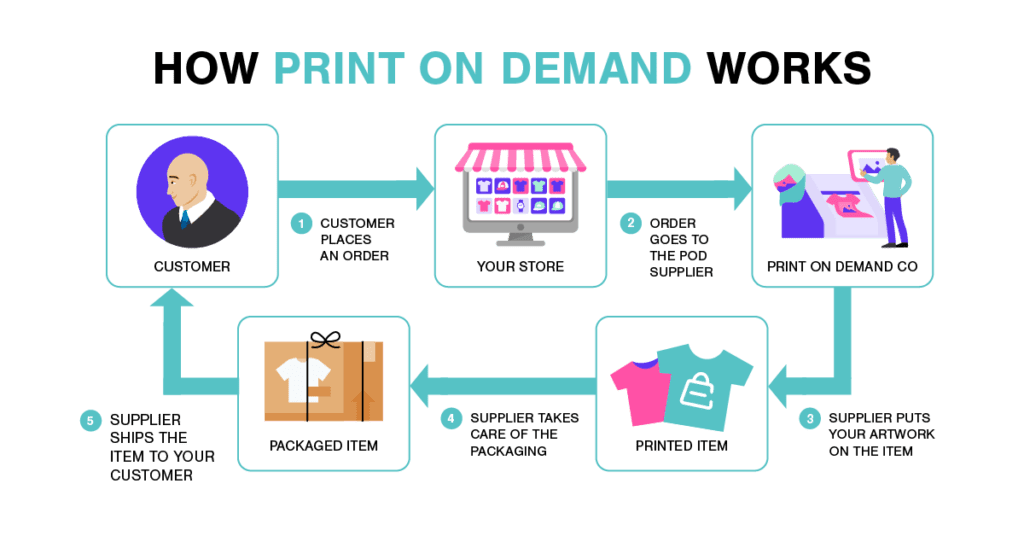
Print-on-demand is a process where you work with a supplier to customize products. Common options include t-shirts, mugs, or books. You will customize these with your own designs to sell them online. This is where the magic happens.
When a customer buys a product, the design is printed on the product. Then it is shipped directly to them. You create designs and promote the items.

This model is particularly suited for artists and graphic designers. But, all creative entrepreneurs who want to monetize their designs can do it.
Getting Started with Print-on-Demand
To begin, focus on creating unique designs that appeal to your target market. Use free design tools like Canva or GIMP if you’re on a tight budget. These tools offer a range of features that can help you create professional-looking designs. You don’t even need graphical design experience.
Next, choose a POD service provider. Common options include Printful and Printify. These platforms integrate seamlessly with Shopify or Etsy. This makes it easy to set up your online store.

Marketing Your Print-on-Demand Products

Marketing is crucial for POD success. Leverage social media platforms to showcase your designs and build a following. Instagram and Pinterest are particularly effective for visual products. Create content that your followers will like.
Content marketing can be a powerful tool for POD businesses. Create blog posts, videos, or infographics. All of these must provide value to your audience first. But they should also showcase your products.
This can soon become one of the online businesses that generates huge amounts of money. One way or another, it’s a bit more specific way to make money. Luckily for you, we have covered all the ways and tips you need to know.
Scaling Your Print-on-Demand Business

As your business grows, expand your product line based on customer feedback and sales data. Continuously improve your designs and stay on top of trends in your niche.
Consider diversifying your sales channels. While you might start on a platform like Etsy, consider launching your own website to have more control over your brand and customer relationships.
Analyze your sales data regularly to identify top-selling designs and products. Use this information to inform your future design decisions and marketing strategies. The goal is to start making more and more money online. Print-on-demand services are an easy and profitable venture. Keep that in mind.

Way 3: Digital Products – Selling Knowledge and Skills
Selling digital creations is an excellent way to start an e-commerce business with minimal upfront costs. This model leverages your knowledge and skills, turning them into profitable digital assets.
Types of Digital Products

Digital products come in many forms. Ebooks and online courses are popular choices, allowing you to share expertise on any topic. These can range from detailed guides on niche subjects to comprehensive courses on broader topics.
Software, apps, and digital tools cater to those with technical skills. This could include anything from productivity apps to specialized software for specific industries. For creatives, digital art, templates, and printables offer lucrative opportunities. These might include design templates or printable planners and worksheets.

Once again you can use an eCommerce platform to sell. You still need to think up of interesting business name and have a decent social media presence.
If you’re interested in making money with ebooks, check out our guide to learn how to create, market, and sell them effectively.
Creating Your First Digital Product

Start by identifying your area of expertise and researching market demand. Use tools like Google Trends or social media listening to understand what your potential customers are looking for. Look for gaps in the market or common problems that your knowledge can solve.
When creating your product, focus on providing value and solving a specific problem. For ebooks or courses, tools like Google Docs or Canva can help with creation and formatting. If you’re developing software or apps, consider using open-source tools to keep costs down.
If your digital product includes presentations, guides, or training materials, consider using a tool to convert PPT to PDF document. This ensures your content is professionally formatted, secure, and easily shareable across different devices. PDFs help maintain the integrity of your visuals and text, making them ideal for selling digital products like online courses, business templates, or reports.
Setting Up a Digital Product Store

Choosing the right platform to sell your digital products is crucial. For beginners, platforms like Gumroad or Teachable offer easy setup and built-in payment processing. These platforms handle the technical aspects of selling digital products, including secure file delivery and payment processing.
If you prefer more control, consider setting up an e-commerce website using WordPress with WooCommerce. This option requires more technical know-how but offers greater flexibility and customization options.
You can use our Web Hosting Advisor to learn more about your hosting actual needs.
Ensure your sales page addresses common questions and objections. Consider including an FAQ section, testimonials (once you have them), and a clear outline of the product’s contents.
If you are selling an e-book, consider the Amazon Kindle project. There you can create covers and offer your e-book to millions. This can be the right business model for most of you. If you have a few thousand followers on social media, share the link to the Amazon listing.
Growing Your Digital Product Business

Building an email list is a vital step you need to know about. Offer a free sample or “lite” version of your product. Do this to get email addresses. Then, use email marketing to nurture leads and inform subscribers about new products or updates.
Leverage affiliate marketing by allowing others to promote your products for a commission. This can significantly expand your reach. Even better, there are no upfront marketing costs. Platforms like ShareASale or ClickBank can help you set up and manage an affiliate program.

Squarespace: Best for Bloggers and Artists
Essential Steps for Any eCommerce Business
Regardless of the model you choose, certain steps are crucial. Well, these are crucial if you want to launch a successful eCommerce business on a tight budget.
1. Market Research on a Budget

Effective market research doesn’t have to be expensive. Use free tools like Google Trends to identify popular search terms in your niche.
Social media platforms offer valuable answers. Use these to get into your target audience’s preferences and behaviors. Join relevant groups on Facebook. In addition, use hashtags on Instagram to see what your potential customers are discussing.
Join relevant online communities and forums to understand customer desires. In general use all marketing channels you can. Always mix the free ways to market your product with paid ones. As you make more and more profit, focus on paid methods. Although can be expensive, these are far more effective. In general, these can help you attract more buyers in less time.
Conduct simple surveys using free tools like Google Forms. Now you can collect valuable details about what your customers want and need.
2. Building Your Online Presence

Creating a professional online presence is crucial, even on a budget. Platforms like WordPress.com or Wix offer free website builders with eCommerce functionality. The free options may have limitations. But, they provide a good starting point for new entrepreneurs to establish their online presence.
Customize your site to reflect your brand identity and ensure it’s mobile-friendly. With the majority of online shopping now happening on mobile devices, a responsive design is something you should consider.
Use social media platforms to build brand awareness. Use these to engage with your audience as well. To get the best results in the shortest time frame, choose platforms where your target audience is most active. For example, if you are selling art, Pinterest works well.
3. Legal Considerations

While starting on a budget, don’t overlook legal requirements. Research the basic business structures available in your area and choose one that fits your needs. Many regions offer low-cost options for registering a small business or sole proprietorship.
Familiarize yourself with eCommerce regulations. Focus on data protection laws and tax requirements. This is particularly important if you’re selling digital products or operating across different jurisdictions.
4. Marketing Strategies for Zero-Budget Businesses
Marketing without a budget requires creativity and effort. Harness the power of social media marketing by consistently posting engaging content and interacting with your audience. Develop a content calendar to ensure regular posting.
Implement SEO best practices on your website to improve organic search rankings. There are a few main factors to consider here.
- Use relevant keywords. Incorporate targeted, high-traffic keywords naturally in your content. Make sure to use these in the title tags, meta descriptions, and URLs.
- Optimize for mobile. Ensure your website is mobile-friendly, as Google prioritizes mobile-optimized sites in search rankings.
- Improve page speed. Fast-loading pages enhance user experience. It’s also favored by search engines, so compress images and reduce code where possible.
- Create high-quality content. Regularly publish informative, engaging, and original content that provides value to users.
- Optimize meta tags. Write compelling and keyword-rich meta titles and descriptions that improve click-through rates and search visibility.
- Ensure URL structure is SEO-friendly. Use short, descriptive URLs with relevant keywords to make it easier for search engines and users to understand the content.
- Focus on user experience (UX). A well-designed, easy-to-navigate website keeps users engaged longer. It also reduces bounce rates and improves rankings.
- Use alt text for images. Add descriptive alt text to your images, enabling search engines to understand and index them for image search results.
- Build backlinks. Acquire high-quality backlinks from reputable websites to boost domain authority and improve search engine rankings.
- Use HTTPS. Secure your site with HTTPS, as Google prioritizes secure websites, and it helps build user trust.
- Optimize for voice search. With increasing voice search use, optimize content for conversational queries and long-tail keywords.
- Leverage schema markup. Use structured data (schema markup) to help search engines better understand your content and improve rich snippets.
- Create a sitemap. Submit an XML sitemap to search engines to ensure they can crawl and index all the important pages on your site.
Overcoming Common Challenges
Starting an eCommerce business without money presents unique challenges, but with the right strategies, these obstacles can be overcome.
Managing Cash Flow Without Initial Capital

One of the biggest challenges in starting an eCommerce business without money is managing cash flow. The key is to be creative and resourceful. Start by reinvesting all profits back into the business. This approach allows for organic growth without external funding.
When dealing with suppliers, especially in dropshipping, try to negotiate favorable payment terms. Some suppliers might agree to delayed payment or smaller upfront costs as you build a track record. The less startup capital you need, the better.
Building Customer Trust on a Budget
In e-commerce, trust is currency. Building it doesn’t necessarily require a large budget, but it does demand consistent effort and authenticity. Start by providing excellent customer service. Respond promptly to inquiries, be helpful, and go above and beyond when resolving issues. This level of service can set you apart from competitors and build a loyal customer base.
Encourage and showcase customer reviews. Positive reviews act as social proof, boosting the confidence of potential buyers. Make it easy for customers to leave reviews and feature them on your website and social media. If you receive negative feedback, address it publicly and professionally. Keep in mind that all who sell online will get a negative review at some point.
Learn how to add Google Reviews to your website with our step-by-step guide to boost trust and credibility.
Scaling Your Business

As your eCommerce business starts to gain traction, thoughts of scaling will naturally arise. The challenge lies in growing without compromising the lean principles that got you started.
Expanding your product line or services is another way to scale. For dropshipping businesses, this might mean adding complementary products or exploring new niches.
Print-on-demand entrepreneurs can introduce new designs or product types based on customer feedback. If you’re selling digital products, consider creating advanced versions or companion products.
As orders increase, you may find yourself stretched thin. This is where outsourcing comes in. Platforms like Fiverr or Upwork connect you with freelancers who can handle tasks like customer service, graphic design, or content creation. Start by outsourcing time-consuming tasks that don’t require your personal touch. Now you have more time to focus on needed things.
Consider partnering with other businesses or influencers. Collaboration can help you reach new audiences. These should be in the same niche as you may know. Also, a social media influencer needs to have a strong audience.
As you scale, keep a close eye on your metrics. Monitor key performance indicators (KPIs). One of the essentials is conversion rates. But add average order value and customer acquisition cost. Use this data to make decisions about where to invest your time.

Conclusion
Starting an eCommerce business without money is not only possible but can be a rewarding journey. By leveraging models like dropshipping, print-on-demand, or digital products, you can turn your entrepreneurial dreams into reality with minimal upfront investment. These approaches allow you to test your business idea and build a customer base without the financial risks associated with traditional retail models.

Next Steps: What Now?
- Think again and choose a type of business you like.
- Start working on completing the basics.
- Start selling physical products or digital ones.
- Make your first profit and spend money on your business.

